
Starting a nursing job in Japan as a foreigner comes with a lot of paperwork — and somewhere in that stack, you will almost certainly be asked for a hanko for nurses in Japan. If you’ve never owned a personal seal before, or if you assumed a signature would be enough, this guide is for you.
Japan’s healthcare sector is one of the most document-heavy work environments in the country. Contracts, licensing verifications, payroll registrations, benefits forms, and hospital-internal procedures all rely on the hanko as a standard proof of identity and consent. For foreign nurses arriving mid-contract cycle or under tight onboarding timelines, not having a seal ready can delay your start date, hold up your first paycheck, or create friction with HR during an already stressful transition.
This guide walks you through why nurses specifically are asked for a seal, which documents require one and when, what type of hanko is the right fit for your situation, and how to order one entirely in English before your first day.
Whether you’re fresh off the plane, mid-job-search, or already onboarded but realizing you’ve been getting by on luck, the information here is practical, specific, and written from the foreigner’s side.
Why This Segment Is Asked for a Seal
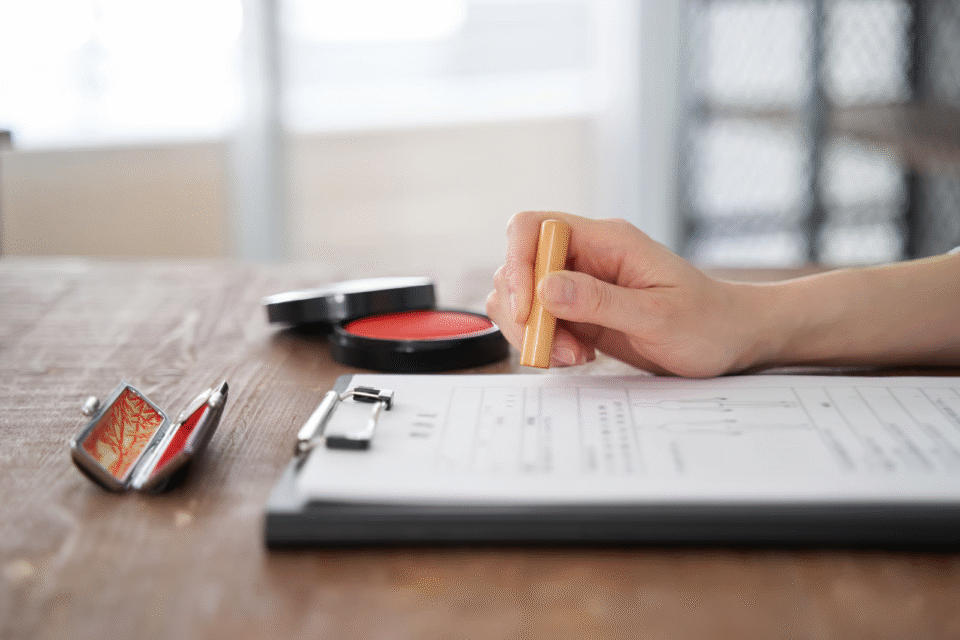
Nursing in Japan sits at the intersection of two systems that both rely heavily on hanko: the healthcare licensing system and standard Japanese employment administration.
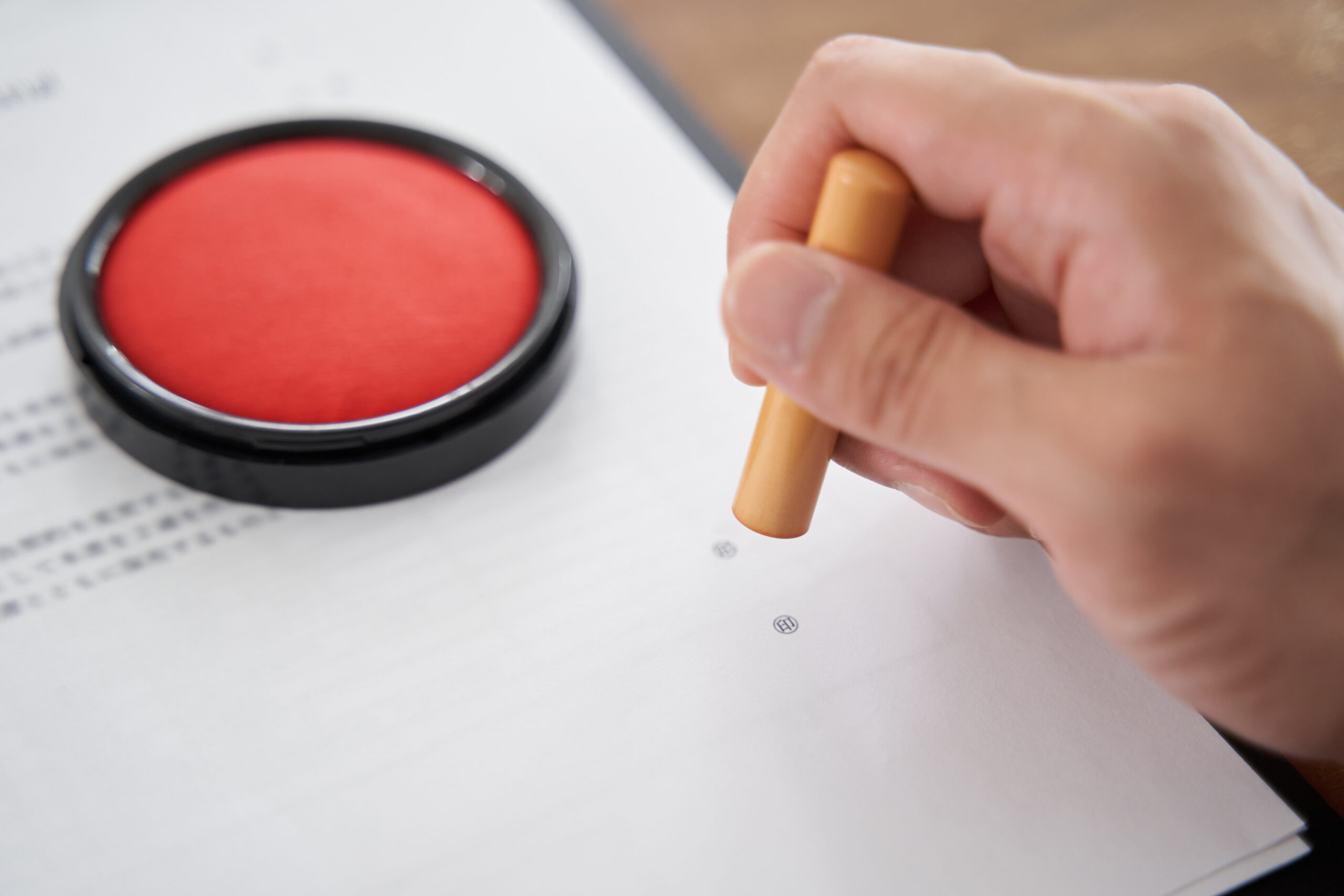
When you join a hospital, clinic, or care facility as a foreign nurse, your HR department treats you the same as any Japanese employee for most paperwork purposes. Japan’s standard employment framework — which covers labor contracts, social insurance enrollment, and tax withholding — uses the hanko as a default sign-off tool. Signatures are accepted at some institutions, particularly at international hospitals or foreign-affiliated clinics, but in the majority of workplaces, especially public hospitals and large private chains, a personal seal is either required or strongly preferred.
On top of that, nurses deal with documentation layers that other professions don’t. Your nursing license registration, issued by the Ministry of Health, Labour and Welfare, involves government forms that traditionally use hanko. If you’ve passed the NCLEX or hold a foreign nursing qualification and went through the Japanese equivalency process, you’ve likely already encountered seal requirements in that application process.
There’s also a practical trust dimension. In Japanese hospital culture, a hanko on a document signals that the person named has physically reviewed and approved what’s written. For nurses handling sensitive patient information, medication records, or incident reports, that convention carries institutional weight. Being the only staff member without a seal can create friction in day-to-day workflows, even when a signature is technically acceptable.
Micro-scenario: Sita, a nurse from the Philippines, started her role at a Osaka general hospital two weeks before her hanko arrived. Her labor contract was temporarily held, and HR had to route a signature-based exception through two department heads before she could be formally onboarded. It delayed her social insurance registration by one pay cycle.
Common Documents and Timelines
As a foreign nurse in Japan, you will likely encounter hanko requirements across several stages of onboarding and ongoing employment.
At the point of contract signing:
- Employment contract (雇用契約書)
- Confirmation of salary terms
- Non-disclosure or patient data handling agreements
During the first week:
- Social insurance enrollment forms (health insurance and pension)
- Tax withholding declaration (給与所得者の扶養控除等申告書)
- Bank account registration forms — if your hospital processes salary payments internally
- Employee identification or badge application forms at some institutions
Ongoing during your tenure:
- Internal request forms (vacation, overtime, scheduling changes)
- Incident or near-miss report forms
- Continuing education or licensing renewal supporting documents
- Expense reimbursement forms
The timeline pressure is real. Most HR departments want your paperwork complete within the first three to five business days. If your hanko hasn’t arrived by then, you may need to ask your HR contact whether a temporary signature is acceptable while you wait — many will accommodate this, but it’s not guaranteed and it adds a step.
Checklist — Documents to ask your HR contact about before your first day:
- Is a hanko required for the employment contract, or is a signature acceptable?
- Which forms require a seal vs. a signature?
- Is there a specific size requirement (common is 10.5–12mm for personal use)?
- Does the hospital accept romaji (romanized) hanko, or must it be kanji?
- Is there a recommended vendor, or are you free to order your own?
Common mistakes in this section:
Waiting until after your start date to order. Lead times for custom hanko, even from fast-service providers, are typically a few business days. Order at least one to two weeks before your contract begins.
Assuming your name in romaji will automatically be accepted. Some institutions — particularly government-affiliated hospitals — prefer kanji. If your name has a standard kanji rendering or if your residence card lists a kanji name, confirm this with HR before ordering.
Ordering a seal with a full name when your workplace only needs a surname. Many Japanese employees use surname-only hanko for daily HR use. Check what your colleagues use.
Recommended Hanko Type and Size
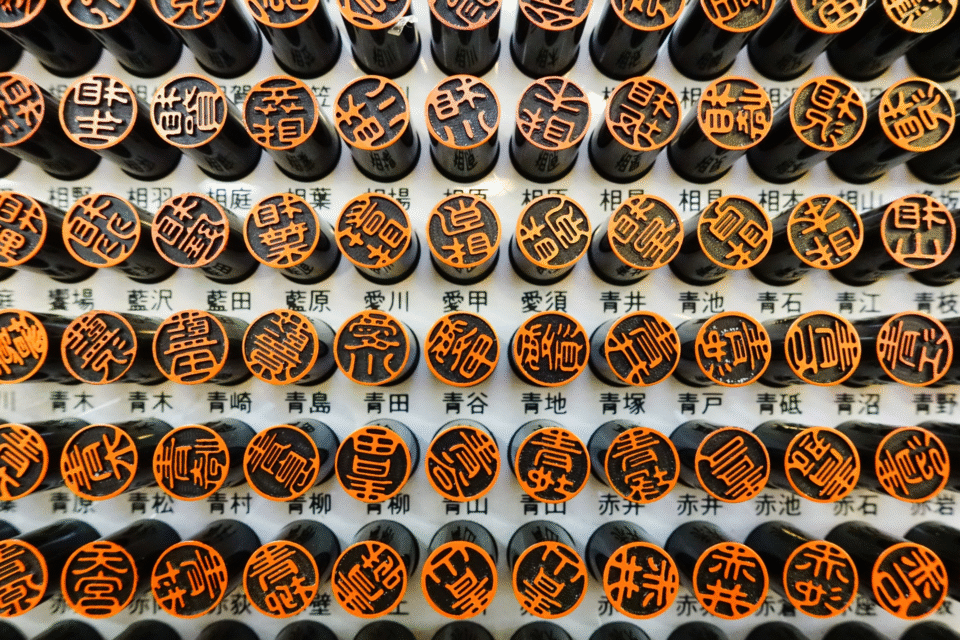
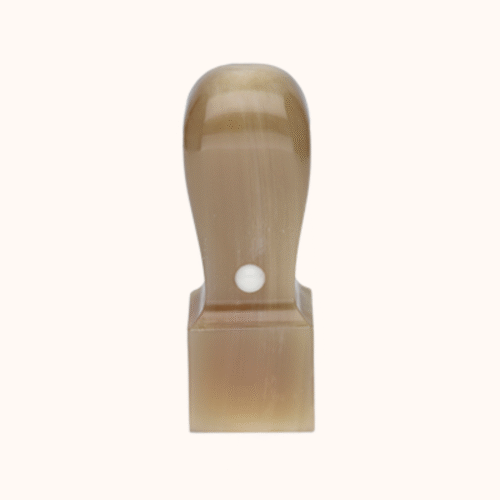
Not every hanko is the same, and for nursing work in Japan, the practical choice is almost always a mitome-in (認め印) — a personal everyday seal used for non-financial, non-official administrative purposes.
This is distinct from a jitsuin (実印), which is the official registered seal tied to major legal transactions like property purchases or large contracts. You are very unlikely to need a jitsuin for nursing onboarding. A mitome-in is sufficient for employment contracts, HR forms, and internal documentation at the vast majority of healthcare employers.
Size: The standard range for a personal mitome-in is 10.5mm to 12mm in diameter. Stick within this range. A 10.5mm or 11mm seal is the most common choice and fits neatly on standard form fields.
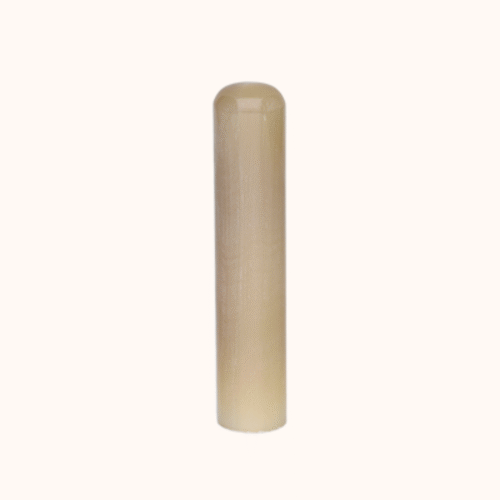
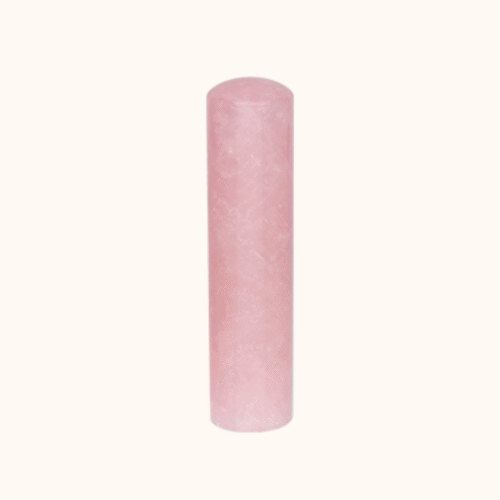
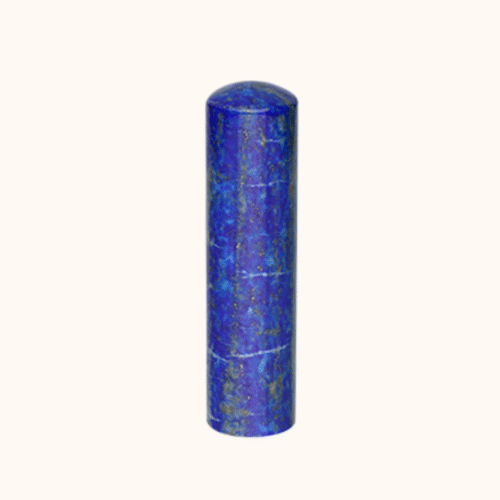
Material: Practical and durable is the priority here. Resin, wood, and acrylic are all fine for everyday use. You don’t need premium materials for a work hanko.
Name options for foreign nurses:
- Katakana: Your name rendered in katakana is the most widely accepted option for foreigners. It reads as unmistakably foreign while still fitting the standard hanko format. Example: サラ・ジョンソン or just ジョンソン (Johnson) for a surname-only seal.
- Kanji: If your name has a common kanji rendering, or if you’ve been given a Japanese name variant (some foreign nurses working in Japanese-language environments adopt one), this is also acceptable and sometimes preferred.
- Romaji: Accepted at private and international hospitals, but less reliable at government-linked institutions. If you’re unsure, katakana is the safer default.
Micro-scenario: Marcus, a nurse from Canada working at a Tokyo rehabilitation center, ordered a romaji hanko before arrival. His employer accepted it without issue. His colleague Amara, working at a public hospital in Nagoya, was asked to re-order in katakana after HR flagged her romaji seal as inconsistent with internal filing standards. When in doubt, go katakana.
Ordering Tips in English
One of the practical barriers for foreign nurses is navigating the ordering process in Japanese. Most traditional hanko shops — the ones you’ll find near train stations — operate entirely in Japanese, with staff who may not be comfortable with foreign name rendering in katakana or romaji.
HankoHub is designed specifically for this. The ordering process is in English, name rendering for foreign names is a standard part of the service, and you can confirm your name format before the seal is made. For nurses working under tight onboarding timelines, the ability to order online without a language barrier and without visiting a physical shop is genuinely useful.
Practical ordering tips:
- Order as early as possible — ideally two weeks before your start date, minimum one week.
- Have your name as it appears on your residence card or nursing license ready before you start the order.
- Confirm with your HR department whether they prefer katakana, kanji, or whether romaji is acceptable. Then choose accordingly.
- For daily HR use, a standard resin or acrylic mitome-in is completely sufficient. No need for premium materials unless you want them.
- If you want one seal for both work HR and general life admin (city hall, bank, utilities), a 10.5mm–12mm mitome-in works well across all of these contexts.
If you’re still looking for the right role, ComfysCareer is a solid starting point for foreigner-friendly jobs in Japan.
FAQ
Do I need a hanko to work as a nurse in Japan? Not legally in all cases, but practically, yes. Most hospitals and healthcare employers in Japan use hanko as the standard for employment documentation. A signature may be accepted as a workaround at some institutions, but not reliably. Having a hanko before your start date removes a significant source of friction.
Can I use a signature instead? Some employers — particularly international hospitals, foreign-affiliated clinics, or smaller private practices — will accept a signature. Public hospitals and large Japanese healthcare chains commonly require a seal. It’s worth confirming with HR before your first day, but don’t assume a signature will be enough.
Does my hanko name need to match my passport? Your hanko should reflect the name you’re using professionally in Japan — typically the name on your residence card. For most foreign nurses, this means katakana rendering of your legal name. If you’ve registered under a specific name format with the nursing license authority, use that.
What if I need my hanko urgently? HankoHub offers expedited production for situations where the standard lead time doesn’t fit your schedule. If you’re already in Japan and starting soon, check available shipping options at checkout.
Will one hanko cover all my needs as a nurse in Japan? For most foreign nurses, yes. A mitome-in in the 10.5–12mm range works for employment contracts, HR forms, city hall registration, national health insurance, and bank account setup. The only exception would be if you’re completing a major legal transaction — like taking out a large loan or purchasing property — which requires a registered jitsuin. For nursing onboarding, a mitome-in is all you need.
My hospital gave me a list of approved hanko vendors. Should I use one of those? If your employer has a preferred vendor, you’re free to use them, but you’re also generally free to order from any reputable provider. What matters to HR is the seal itself, not where it came from.
Next Steps

If you’re preparing for a nursing role in Japan, getting your hanko sorted early is one of the simplest ways to remove stress from your first week. Order a personal mitome-in from HankoHub in English, with your name rendered correctly for the Japanese context, and have it in hand before your HR paperwork begins. It’s a small thing that makes a real difference when you’re already managing relocation, licensing, and a new workplace at the same time.